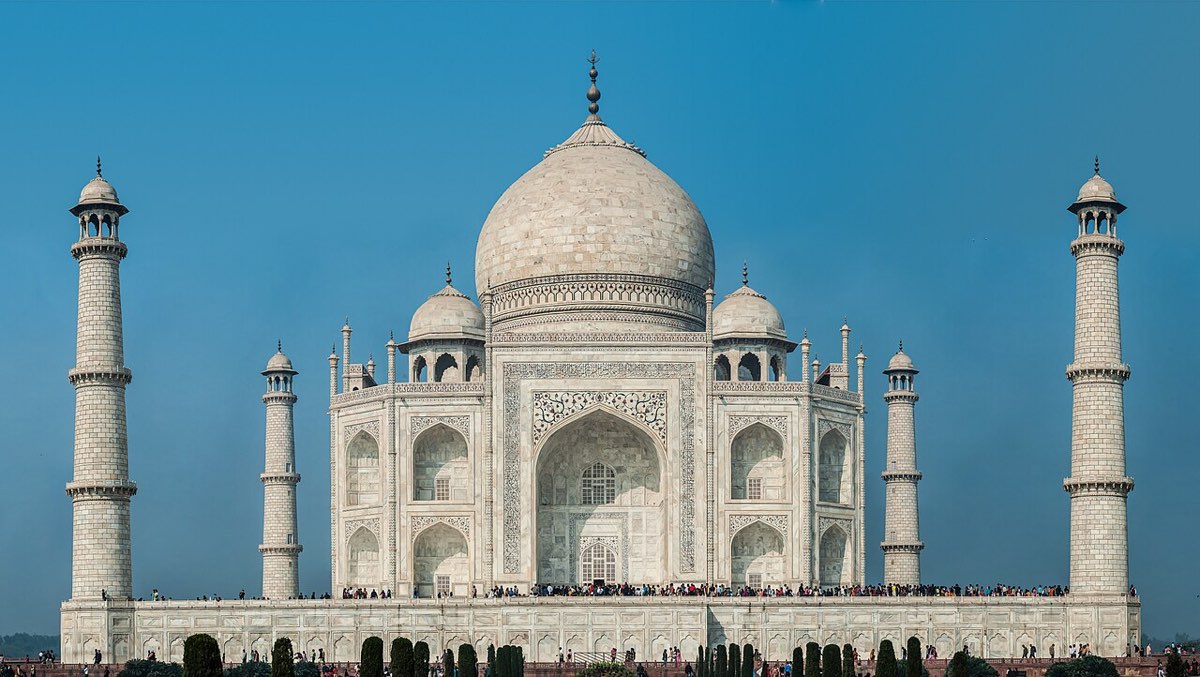
This masterpiece that was constructed by the Turkish architects from Istanbul is the most beautiful, the most splendid and the most famous mausoleum of the world. The architectural wonders pertaining to Baburlu families are abundant in India and those that are still alive are glittering and they evoke the admiration of those who visit them. Today, the places of Pakistan that are most frequented by the tourists are Lahor Palace, Padişahi Mescid (Small Mosque of Ruler) with the widest colonnaded court in the world that was constructed in the same city, and the palaces and mosques in Agra, Delhi, Haydarabad and the other cities. Each of these works is a masterpiece of architecture.
However, there are not any mausoleum or any masterpiece of architecture that is as much beautiful, magnificent and famous as Taj Mahal.
Shah Cihan's wife, Ercumend Banu had won the affection of the entire empire through her beauty, intelligence, and generosity and she was the most distinguished sultan. Due to this characteristic, she was called as Mumtaz Mahal. Shah Cihan had fallen in love with her at the very age of 16 and he had waited for 5 years in order to get married. Shah Cihan would take his most beloved wife to everywhere and he would pay great attention to her ideas and tastes.
This sentimental, intelligent and beautiful woman died in the course of giving birth to his 14th child in the year of 1631. Shah Cihan did not eat or drink anything during eight days pursuant to the death of his wife and he did not even get out of his room. On the ninth day, he opened the door of his office and got out of it. When he got out, it had been seen that his hair had become totally grey and he had been fairly depressed and prostrated. The emotional and real lover, the faithful ruler decided to construct a mausoleum for his beloved wife that he would keep in his heart until his death. This mausoleum should be so beautiful and cheering to symbolise the pure love and at the same time so magnificent and splendid. Therefore, he would find the greatest architects all over the world, and he would grant his treasury to their order for all the expenditures related with this work. To this effect, he wanted some architects from Istanbul. The architect who came from Istanbul was Mehmed Isa Effendi who was one of the students of Mimar Sinan and his staff.
Mehmed İsa Effendi had worked for moths and drawn the plan of Taj Mahal. IN the structure of Taj Mahal, extremely limpid and white marbles were used. This brilliant white marble had fine blue veins on it. The magnificent dome that was made of this marble has a height of 82 metres over the ground. This height increases with the golden crescent and the star on top of the dome. This mausoleum has four minarets that were made of white marble.
The construction works were started in the year of 1631 and it was completed in the year of 1652. The sarcophagus of Mumtaz Mahal and the sarcophagus of Shah Cihan that was put near to the sarcophagus of Mumtaz Mahal pursuant to his death are on the upper floor. The most beautiful models of engraving can be seen in these sarcophagi that are located under the dome. Each voice uttered by a mouth of a human being in the place where the sarcophagi are located is echoed for seven times in the magnificent dome.
The walls of Taj Mahal that is a treasury on its own as a masterpiece of art are ornamented with real jewel stones of the treasury. Thousands of agates, mother-of-pearl and turquoise stones are recessed into its walls and there are also 42 emeralds, 142 rubies, 625 brilliant stones and 50 units of giant pearls over the walls. 47 millions of golden liras were spent for the construction of this mausoleum and the jewels in the walls are not included in this figure. Taking into consideration the expenditure of 19 millions of golden liras for the great Suleymaniye Mosque in Istanbul, the level of the great sacrifice made for Taj Mahal can be much more easily understood.
This monument is the masterpiece of the Turkish architects that Shah Cihan had invited from Istanbul. Its plan was designed by Mehmed Isa Effendi from Istanbul and the dome was constructed by the architect Ismail Effendi from Istanbul. The superb inscriptions on the walls were written by the calligrapher Serdar Effendi from Istanbul. Several foreign masters and meanwhile the Italian architects have worked in the service of the aforesaid architects.