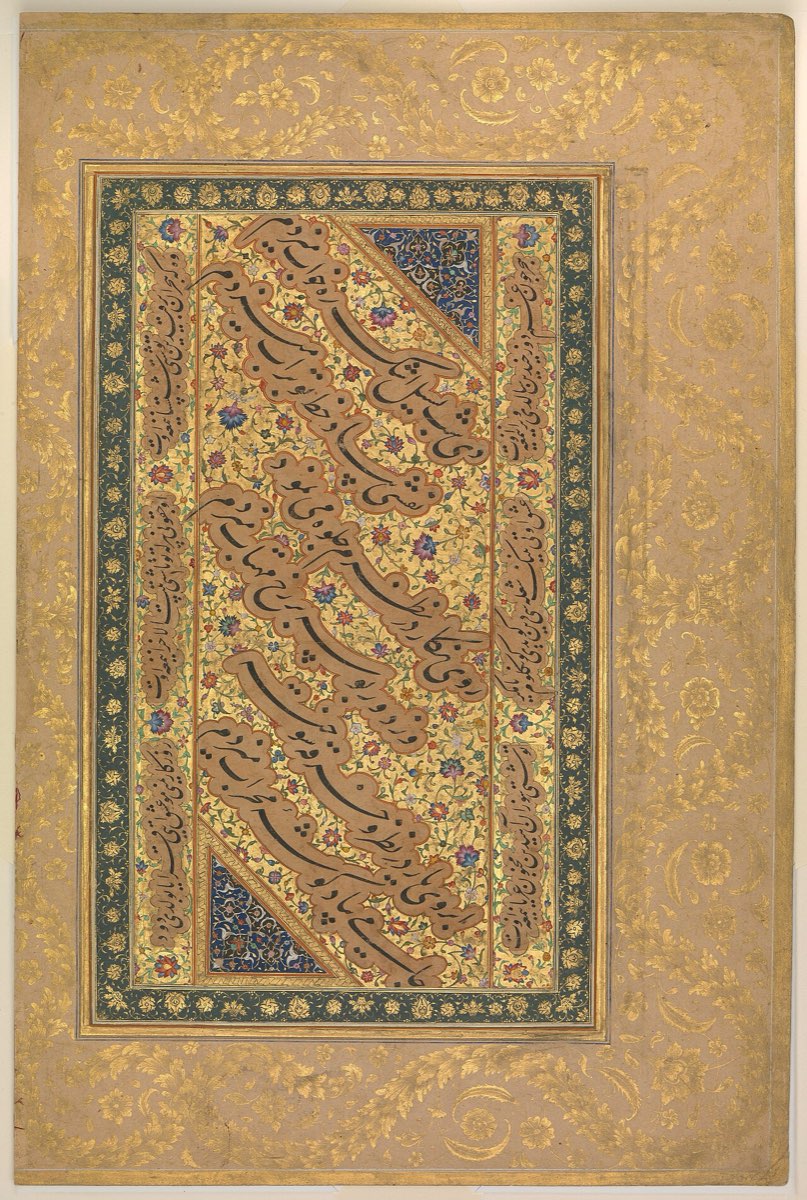
Before his enthronement, Shah Cihan had to defeat his brothers that were involved in a struggle for the throne. When the defeated them in this struggle, he killed all the men from his lineage in order to prevent the disintegration of the empire and the struggles for the throne that could come into existence in the further periods. Meanwhile, he suppressed the rebellion of Afghan emirs. He captured Devletabad, Gölkanda, Micapur and Tibet. The Europeans increased their relations with India in his period.
Shah Cihan had four sons. He assigned them as emirs to various regions in order to have them trained as a governor and prepared for the throne. However, when Shah Cihan was taken ill by a fatal disease in the year of 1658, the struggles for the throne emerged among his brothers even before his death. Of these sons, Evrengzib (Alemgir) arrested his father in the year of 1658 and after a short while, he arrested his brother, Murad and he ascended the throne under the title of Alemgir I.
In the period of Shah Cihan, the empire experienced the most glorious period in policy, art and architecture. An envoy was sent to the Ottoman Ruler, Mehmed IV for the collaboration against the Safevi State; but this cooperation could not be obtained. However, the architects that were sent from Istanbul constructed Taj-Mahal that was the most beautiful and the most splendid mausoleum of the world. The chief architect was Mehmed Isa Effendi from the Ottoman architects. Shah Cihan had constructed this mausoleum for his most beloved wife, Banu Begüm (Mumtaz Mahal) that died in the course of giving birth. He was also buried there.