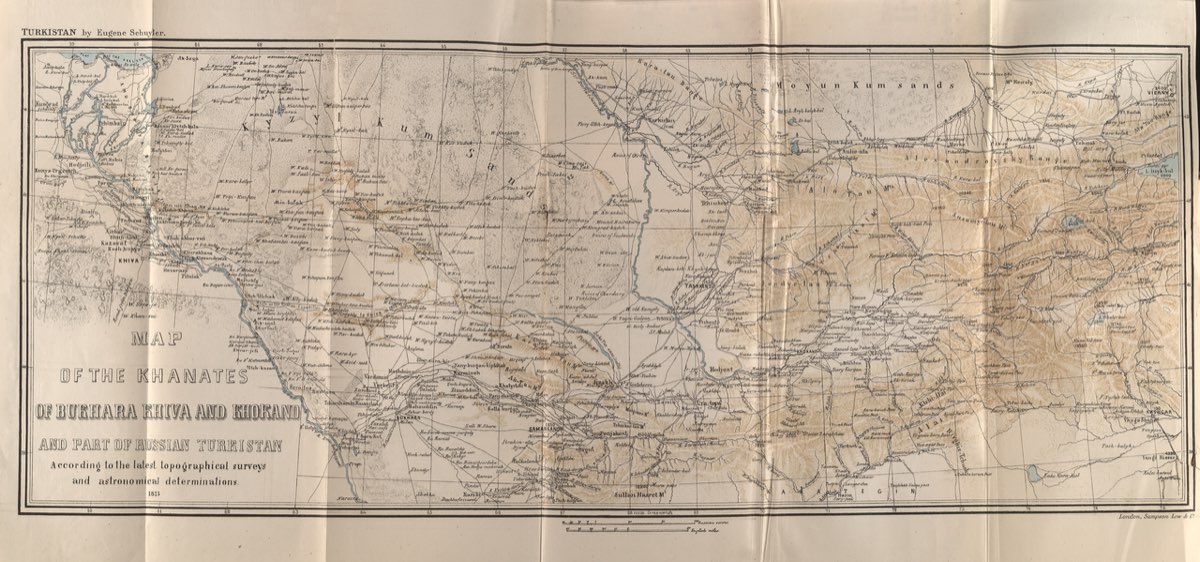
When Russians annexed the Astrakhan Khanate to their lands in the year of 1554, Yar Muhammed Khan who was a member of dynasty ran away and came to Bokhara. Yar Muhammed's son Can married the daughter of Iskender from Sibanogullari that was the ruler of Bokhara. Baki Muhammed who was born from this wedlock declared himself as the Bokhara Khan in the year of 1599 when Uzbek Khanate was defeated by Safevi State and then, dissolved.
Bokhara Khanate that was founded as stated above survived its existence as an independent state for nearly 185 years. Ferghana that was one of its biggest centres remained subject to Bokhara Khanate until the year of 1700 and Belh remained subject to Bokhara Khanate until the year of 1740.
Meanwhile, Nadir Shah, who was from Afsar tribe of Oguz people had ascended the throne of Iran. This shah penetrated into Transoxania in the year of 1740. Ebul Faiz who was Bokhara Khan in that period had to recognise the domination of Iran and he retreated from Belh.
Bokhara Khanate did not follow a policy in the pursuit of conquests. It just tried to maintain its existence.
In the period of Ebul Ghazi who was the last ruler of Bokhara Khanate between the years of 1758-1785, the country was captured by Mangit people who had become Turks although they had Mongolian origin. Mangit people established dominion in Transoxania, Turkmenistan, some sections of Khorasan and the Southern Turkestan. Miranshah Murad who was the leader of these people invaded the throne of Bokhara Khanate. Therefore, the dynasty of Bokhara Khanate changed hands.
In the period of Mangit family, the borders of the state started to become narrow and in the course of time, the state was only confined within the region of Bokhara-Samarkand. Towards the end of the 19th century, the Russians had gradually expanded towards the central regions of Turkestan. Then, Russians captured the lands pertaining to Mangit people. Pursuant to Communist revolution, Bokhara was annexed to the Russian lands like the other Turkish provinces. Bokhara and Samarkand were then included within the borders of Uzbekistan.
In the first periods of the Islam domination, Bokhara was one of the biggest cities and cultural centres of the world that were limited in number. Numerous scientists and men of letters had been trained in this city. The greatest scientist and the most famous one was Ebû-Abdullah Muhammed Buharî who was the scholar of Prophet's sayings.