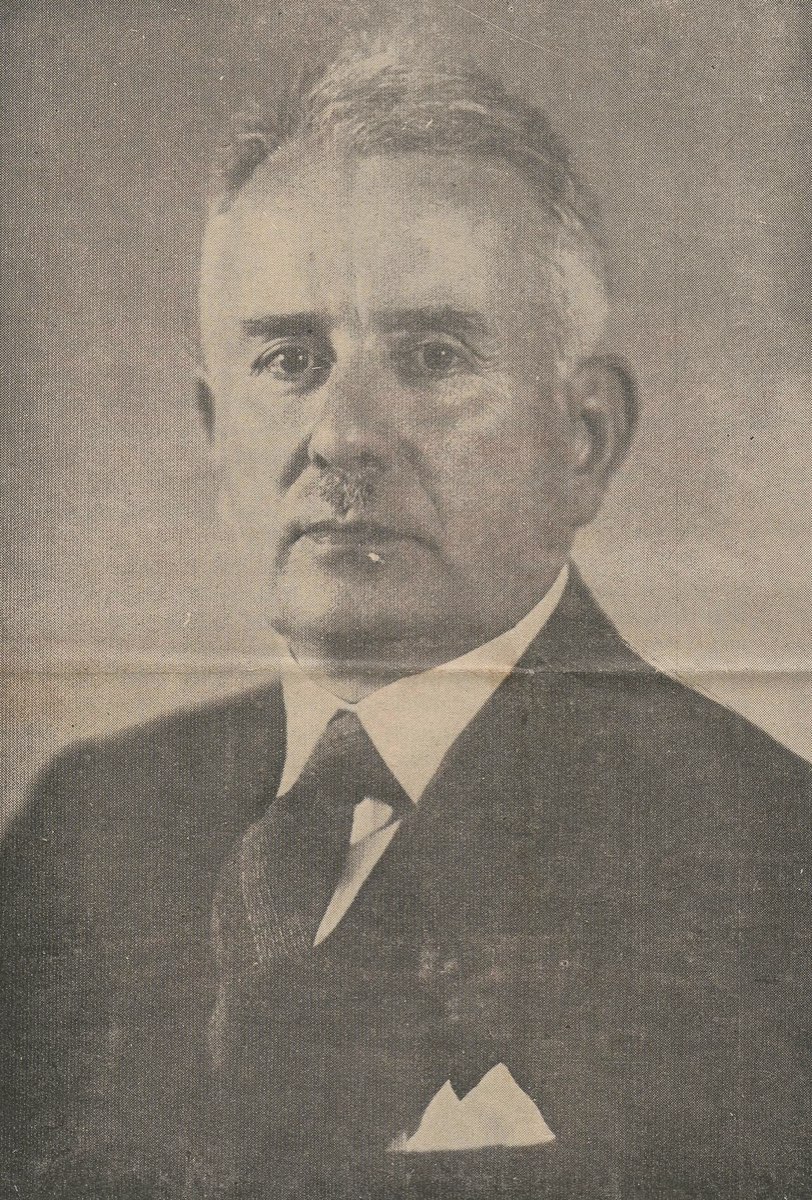
He was born in Istanbul in 1822. His father is Mehmet Emin Pasha. He was admitted to the army as a staff officer in 1905. He took part in the putting down 31 March rebellion. After having participated in various fronts, he became the Commander of Eastern Armies in the National Fight. After liberation, he entered the Parliament as the Deputy of Edirne. In 1924, he resigned from his duties as General and Army Inspector. He chaired "Progressive Party" in the Parliament. He retired in 1927. He died in 1948.
The most significant feature is that: Mustafa Kemal was dismissed from Ottoman Army and condemned in absentia by the Sultan. He went to Erzurum within these circumstances. Even his aide-de-camp left him because of his being rankless. At that time, Karabekir Pasha entered his command with his Army Corps. He believed in the ideal of Mustafa Kemal and wanted them to be sure of Eastern front. He accomplished and was awarded the title of Armenia Conqueror because of his successful operations. However, as war proceeded, Kazım Karabekir felt that he was left aside and neglected because the works were managed from Ankara. He was inquiring the situation by codes constantly.He was telling his ideas to Ankara although they did not ask, and intervened in the government. He once even caused the suspicion that he held the idea of establishing an "Independent State of East", being stimulated by Erzurum Deputy and Minister of Justice Cemalettin Arif Bey.
Kazım Karabekir Pasha was a very clear, honest, stouthearted and artless soldier. Nobody suspected his good will. Therefore, he felt offended when his interventions, appropriate or not, were not taken into consideration. It is obvious that he did positive things even himself.
Karabekir Pasha, established Orphan Schools to make six thousand orphans of the families killed by Armenians to go to school. He undertook the duty of providing clothing and schools for these children. He was writing and composing children and school marches even if he became a subject of humor in the humor newspapers of his period. Kazım Karabekir, who said to Chief Commander Enver Pasha: - If you are thinking of declaring war, then take all German officers in the General Staff away!, was not planning to change his attitude to Mustafa Kemal.
However, since Mustafa Kemal knew very well his share in National Fight, welcomed his recommendations even if he did not apply. However, he did not forgive the plan Kazim Karabekir, Rauf Bey, Ali Fuat and Refet Pasha together arranged.
Ataturk had thought conspiracy was being devised against him because of rejection by Rauf Bey of resignations of Karabekir Pasha, stating that he wanted to turn back to the Parliament, and Ali Fuat Pasha from their positions as Army Inspector and as inspector and deputy on 30 on 26 October 1934 and 30 October respectively.
At the same time, an ultimatum by Britain revealed war danger. Ataturk, since he did not find it appropriate to leave the armies without command in such a period, gathered the Parliament for extraordinary meeting. He made Field Marshal Fevzi Çakmak and five army corps commanders and sent to the general staff and command of the forces. Thus, the government dominated the army. Kazim Karabekir and Fuat Pashas, who entered the Parliament, were excluded and sent to their duties until their duties were transferred to a new inspector. Therefore, the possibility of a coup d'état was prevented.
Undoubtedly, Kazım Karabekir, as a commander, was so successful that he deserved the title of Armenia Conqueror. However, his not being able to demonstrate the same success in political life, made him feel offended believing that he was unjustly treated.His attitude during his position as deputy, his taking part in political tricks instead of serious efforts, prevented his advancement to higher positions before Mustafa Kemal's death.
However, after Ataturk's death, he was elected as deputy from Istanbul and entered the parliament, being appointed as the Chairman of the Parliament. Karabekir was of medium height, chunky person with slight movements, slow speaking and beautiful voice and skills of fine arts. He always set an example for people under his command morally. He proved his skills in Educational field by what he did too.
He never lost his military spirit despite he left the army. He was so proud that cannot be expected from him. He had thought that his self-sacrifices and efforts, successes were forgotten and even tried to be made forgotten by Mustafa Kemal. He shut himself up in his pavilion by the railway in Erenköy after he left the Parliament, and lived a life of banishment for a long time. He wrote his memories in a similar way to Ataturk's book named Nutuk, and named his book Istiklal Harbimiz. These memories which mention about Turkish Independence War in detail, were published by his daughters in 1960.