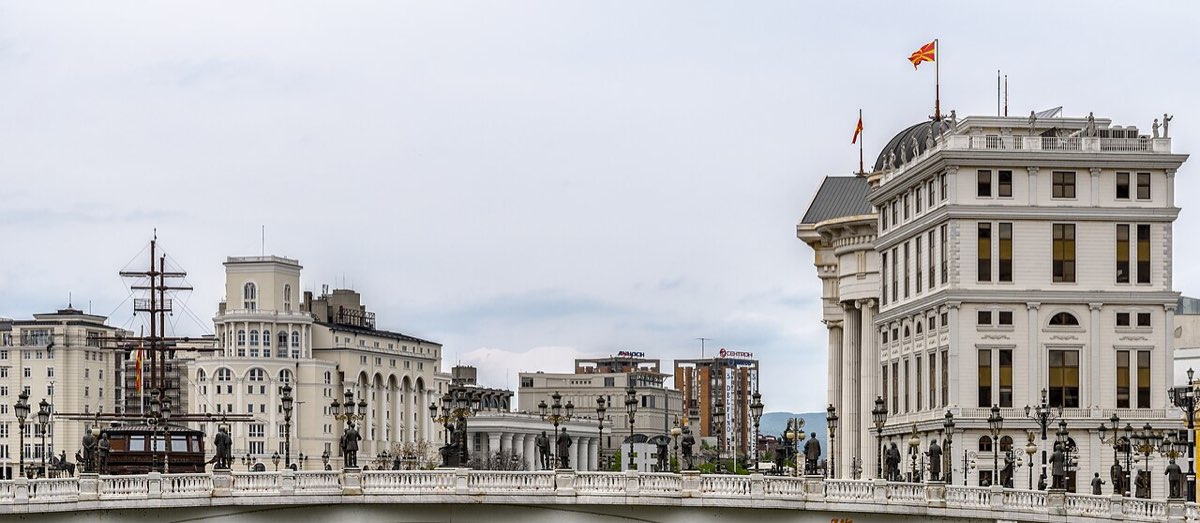
Vardar (Vâr-dâr veya Vár-dár) is the name of a hill of 926 m in the east of Niksic in Karadag, of a village in northeast of Osyek in Croatia and of a river in Macedonia. In other words, one river, two villages and a hill are named as Vardar in the region. It is expected that it was Hun or Avar Turks who gave this name because they lived in Macedonia and Balkans long before Serbians. Our ancestors named the conquered cities and places as their anthropologic names, topographic names, hydro names and other names that they left in their motherland. Among the anthropologic names, most known are Attila, Tarkan, Bayan, Kubrat, Teteven, Tervel, Tutrakan, Telerig, Kuman, Kumana, Mavragan, Omurtag, Sarakina etc. Most often used topographic names are Dervent <Derbent, Gerdap <Girdap, Demirkapı, Vardar, Morova, Baykal, Veles, Velesnitsa <Veles, Rese, Kumanova, Kumaniçevo, Bor, Pecenetsi, Tetova, Karasu, Kazan, Aksu, Balkank, Şar, Şara, Şardağı, Lika, Tetova, Karasu, Kazan, Aksu, Balkan, Şar, Şara, Şardağı, Lika, Banat, Baniya, Kula, Maydan, Maydanpek, Bagat, Karlobag, Bakır, Moghor, Gostivar, Daruvar, Byelovar, Vukovar, Vasvar, Barvar, Radika, Jupa, Jupanya, Ban, Banoniva, Kunova, Şid, Şarkamen, Şarbanovats, Şarbani, Kumane, Şarbanovtsi, Gillan and others. As seen here, they made them Slavic words by some suffixes. For example, Dervent, Gerdap, Valesnitsa, Kumaniçevo, Peçenetsi, Jupanya, Banovina, Şarkamen, Şarbanovats, Maydan, Kula are also used in the area from Middle Asia to Middle Europe.
Byzantium called Vardar river as Vardarios in 1020. In Alexy Komnens memories the river was called as Vardarios in 1079. He said, After forwarding to the west of Strymon river in 1079, we passed a channel between Ustrumca and Karadag and then arrived at the river which was called as Vardarios by local inhabitants. Coming from New Mizia Mountains, this river runs to Aegean Sea through Veria and Selaniko in the south.
Greek called the river as Axios, meaning a valuable thing or running fast. But they use vardar with the suffix -ios".
Albanian writer Kemal Murati claims that Vardar comes from Bardouarios, Uardarios, Svvarddos or Sordos, meaning land. He also claims that this name comes from the rivers Karadirim and Akdirim in Kosovo. This writer also says that Axios in Greek mean also land. Being slaves and servants of Avar Turks in Balkans and Macedonia, Slav tribes called Vardar River sometimes as big water. In fact, they used this name for Treska River. And because they could not find any other name, they also used it for Vardar River.
While it had the same name in the documents of 13th century, Serbian Tzar Stephan Dushan called it Hagia Gregorie and Great Water. But, Slavs living near this rive do not call it Great Water. Some compulsorily try to spread this name but it is not appropriated, because people do also call this river as Vardar in Gostivar where it surges up. Other than Turks, Albanians, Macedonians and other nations also use this name. Slavs some times use Greatwater or Velika for the upper region of Treska River.
In short, Slavs could not find a name for Vardar River. So they sometimes called it Velika meaning great water. But Slav people also did not like this name and it has always been called as Vardar. This word is often seen in their literature, documents, memories and cultural, political and socio-economical lives.
Vardar is a Turkish word and originated from Hun or Avar Turks. It should have relation with Kalkandelen-Usküp, Usküp-Köprülü, Köprülü-Tikveş and Tikveş-Gevgili valleys. It comes from Vurutok through these valleys. Possibly Gostivar Turks give this name to the river. It is a compound word written as vâr-dâr or vár-dár. It is drived from var with the suffix dar. The word var is a Hungarian name and originated from Hun or Avar Turks with the meaning of castle. In Turkish it means anything that exists.
Coming from Arabic to Turkish the word var has many meanings:
1. A castle built for security on the narrow passages in order to watch enemies.
2. A big and sound building
3. To entice someone reliable or achieve ones goal with the help of someone else
4. Castle, fort
5. A square position of soldiers backing to each other during war or training
6. Castle prisoner (in Arabic): someone who is sentenced to live in a castle
"-vâr" is a particle in Persian meaning;
1. -like; child > childlike
2. times; two times, three times etc.
3. -ful: hope > hopeful
4. er, -or; possess > possessor, own > owner
5. Worth of doing stg.
In Turkish "dar" means narrow. French writer E.Benveniste claims that this word comes from Latin word habeo, Sogdca (an Anatolian language spoken BC) and German avoir. But this is meaningless, because the word dar or the suffix -dar is an Arabic or Persian word with many meanings.
"Dâr" means in Arabic:
1. House
2. Place
3. Land, homeland, motherland.
For example, dâr-ı dünya: world, dâr-ı İslam: Islam World (places under Islam rule)
In Persian "dâr" means gallows. It also has the meaning of catching, possessing, keeping etc. on the other hand it has also the meaning of war and fight. It is also used as suffix in Persian.
As seen above, it is very difficult to explain the meaning of Vardar which was given to river, hill or settlement places. It might be a high hill full of trees. Or it may be a place with a castle, which protects from enemies. In Croatia, it should have relation with someone who came from Macedonia because -ats suffix is used in Croatia with the word Vardar and the word Vardarat means someone from Vardar in Turkish.
It may also be a river with a castle next to it. Vardar was a river with plenty of water in past and some writes claim that vardar meant big water in old Persia. Tzar Stephan Dushan ordered to call this water as great water in 1345. Macedonians use this word as anthropologic name, hydro name or topographic name with some suffixes.
For example Vardiste is a place which is drived from Vardar With the suffix iste in Macedonian. Other than this, it is also used with suffixes "-ov", "-ski", "-ovski" or "-ova" for making words Vardarov, Vardarski, Vardarovski and Vardarova. The equivalent of these surnames in Turkish is Vardaroglu. They also make names for women such as Vardarka or Vardarinka, which is seen in the songs around Trabatoviste village near Vardar river.