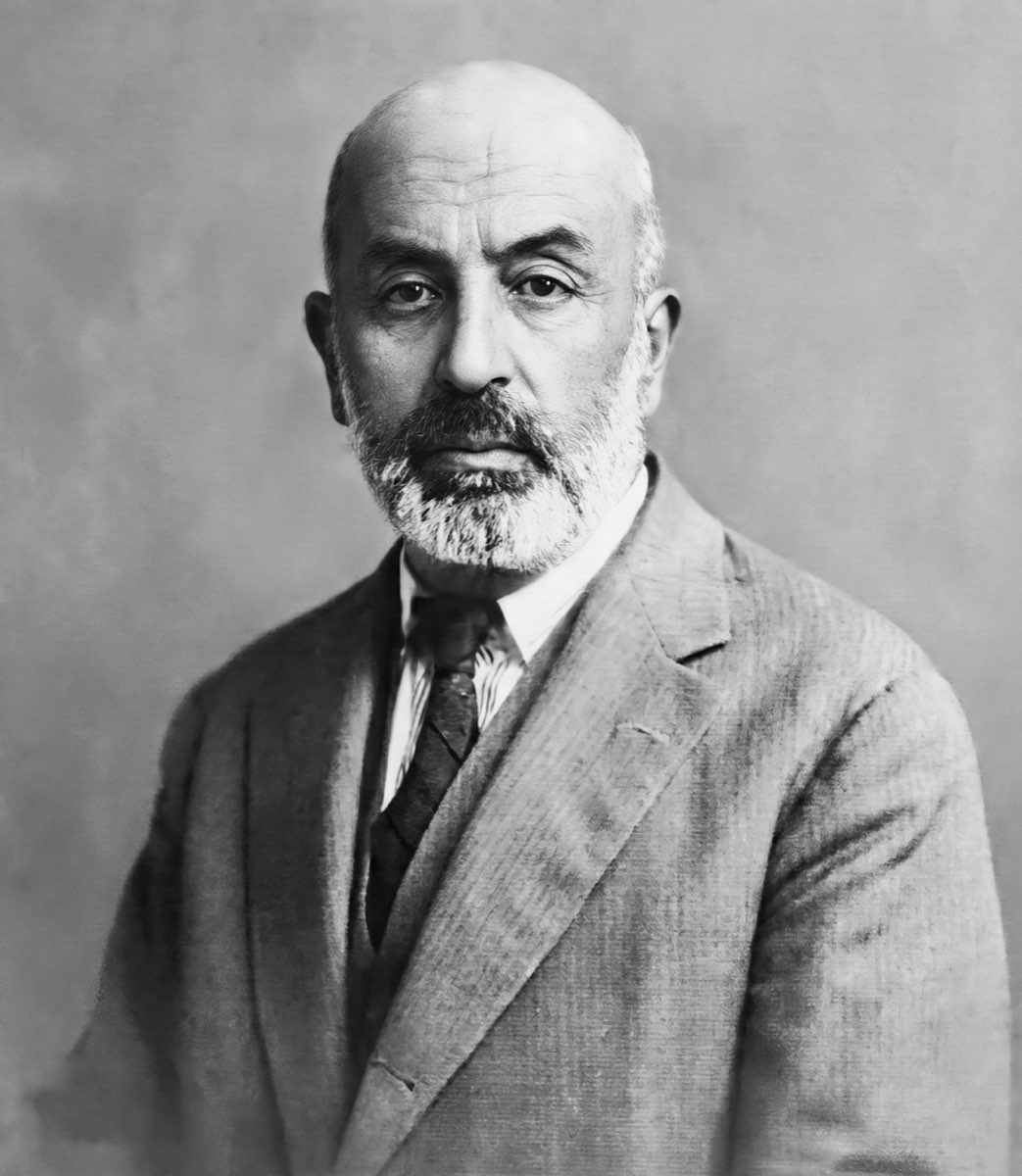
Akif, by crying out "Korkma! Sönmez bu şafaklarda yüzen al sancak!" to the nation who was gradually losing his hopes in the most disastrous and dark days of the country, gave living and fighting progress to Turk spirit.
He was born in 1873 in Istanbul. He graduated from the primary school in Fatih Primary School, and Secondary school in civil service high school, and made his high education as a boarding student in Halkali Civilian Veterinary Surgeon school.
Although he was sent to Edirne as a veterinarian, he went to Istanbul afterwards, and started to work as a literature teacher. As a matter of fact, he was more of a sense and art man than a scientist. He taught literature in Darulfunun in some period. After establishment of Republic, he wrote National anthem. He died in Istanbul in 1936.
Mehmet Akif's real name was Ragıf. This Arabic word, meaning a kind of bread, showed his birth date with a mathematical calculation type of Arabic letters, "Ebced".However, no one, except for his father, used this name. Akif, who began to read when he was four, and who learned Koran by heart during his secondary education, learned Persian from a teacher and French by himself, used to write poems even when he was in Veterinary school.
His first poem is "Address to Koran" and was published in Resimli Gazete in 1895. Mehmet Akif was a excited and active person with wrestler body type, loving wrestling and throwing stones as a sport. His being able to walk for a long time enabled him to walk on foot from village to village when he could not find any vehicles in days when he passed to Anatolia. He taught Arabic in the evenings in the headquarters of Ittihat ve Terakki for some time after Second Constitutional Monarchy. But since he did not adopt nationalist ideas of Ziya Gokalp, he had to leave the job.
For him, nationalist ideas were separatist. The important thing was to spread a unifying foundation for communities, which was only religion. So he began to write in Sırat-ı Müstakim, published by Eşref Edip. Afterwards, he published himself Sebilurresad. Egyptian scholar Muhammad Abduh has definite influence in his political ideas. He wanted return to the pure ethics principles of Islam in its first age. Tevekkul, as he understood, was not to wait for everything from Allah to happen lazily as was common among the public, but on the contrary, to work.
Akif was spreading his ideas with his articles and poems. However, after proclamation of republic and acceptance of secularism principle by the government, he was some kind of offended and preferred to go to Egypt and live there. We see that Akif wrote "meter words with speaking language", as a poet. Most of his pieces of art written in prosody meter, is no different from his moral preach in Nasrullah Mosque. This is because Akif is among people considering poetry as a means of service to the community. On the other hand, in many of his works such as "Mesih Paşa İmamı", "National Anthem", "Çanakkale Şehitleri", we see enthusiastic and mystic lyrism when he takes religious excitement as a subject.
Nobody told Dardanelles War, one of the most glorious pages of our history, as excitedly and beautifully as he did. His poem "Çanakkale şehitleri için (For martyrs of Dardanelles", will live forever without losing its strength: His lines such as "Bir hilal uğruna Yarab ne güneşler batıyor.", "Gömelim gel seni tarihe desem sığmazsın!" are unique. Akif's poems are written on a story plan in general. These are either short like in "Küfe", "Hasır", "Hasta", or extended within each other like in "Suleymaniye Kürsüsünde", "Fatih Kürsüsünde". In this respect, Akif behaves like a realist novel writer with much attention of observance.
He was much influenced by Şirazli Hafiz Şadi, he translated a lot from him, and comprised poems commenting on and interpreting important verses from the Koran. National Education Ministry opened a national anthem contest in 1921. It drew attention that despite everybody attended, Akif did not. His closest friends asked his reason. He said he would not accept reward if he won. His condition was accepted and Akif sent his poem. Within the same year, National Education Minister Hamdullah Suphi (Tanrıöver) chaired and read the national anthem in the first meeting of March. The poem, bearing the dedication to the dearly love of Mehmetçik (Turkish soldier) was made repeated for three times. All three were listened standing, and were cheered. In 12 March meeting, the poem of Akif was accepted as the words of the national anthem. He did not put it into his Safahat, since he gave it as a gift to the nation.
The poem by Mehmet Akif, national anthem, was composed by one of our famous composers, Osman Zeki Üngör. It was encountered with great excitement when it was first played and was accepted as the national anthem. The great poet went to Cairo in 1925. He chaired Turkish Literature Professorship in Cairo University. He lived there for eleven years and turned back to Istanbul in his days close to his death, and passed away on 27 December 1936. He was buried in Edirnekapı Martyr Graveyard. Our national poem, who is being remembered each year with great celebrations, shall be remembered as long as our national anthem is played.
Safahat, in which the poems of Mehmet Akif are gathered, consists of seven volumes. Each volume can be considered as a single book. These are respectively "Safahat", Suleymaniye Köprüsünde", "Hakk'ın Sesleri", "Fatih Kürsüsü'nde", "Hatıralar", "Asım" and "Gölgeler".
The poet gathered all those under 1 book named "Safat" later on.