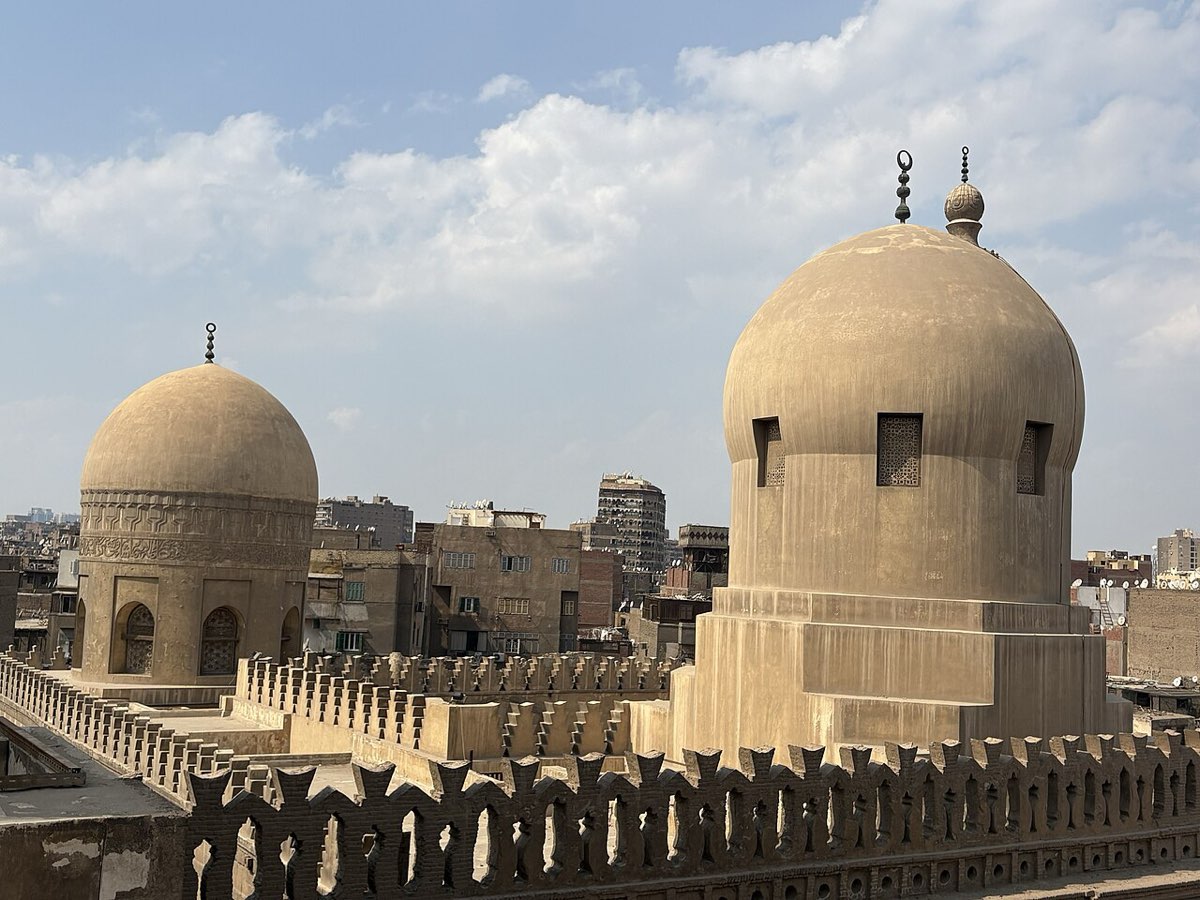
In the period of Tuluni State, Egypt experienced a state of reinvigorating and prosperity again. This state was essentially based on a powerful army and the economical development of the state. Furthermore, the trade was also highly developed in it. As a matter of fact, Ahmed b. Tulun wanted to take the control of the trade routes of Africa that passed through the Egypt and Syria. There was a palace organisation that was established in Egypt in the period of Tuluni State and this organisation developed with a high speed that it even overshadowed the Abbasi State. On the other hand, Ahmed b. Tulun had some magnificent public works in the service of the public. He founded a new city called as Katai. He had a palace and a big mosque that was called with his name constructed in this city together with Dar el-Imare (government office). Furthermore, a hospital (maristan) and an aqueduct that are still kept alive were constructed in this region in the year of 837. The mosque that was the greatest work of Ibn Tulun was finished between the years of 876-879 and it has survived up to today. His son, Humareveyh had also extended the city of Katai and had some gardens and pools built in it.
Ahmed b. Tulun was interested in literature and music and he had written Turkish poems. Humareveyh had become famous due to his protection for scholars and poets. As a matter of fact, the grammarian Mohammed b. Abdullah (died in 944) was under his protection and the lecturer of his sons at the same time. El-Kasım b. Yahya el-Meryemî (died in 929) had written some eulogies in order to celebrate the victories of Humavereyh in wars.