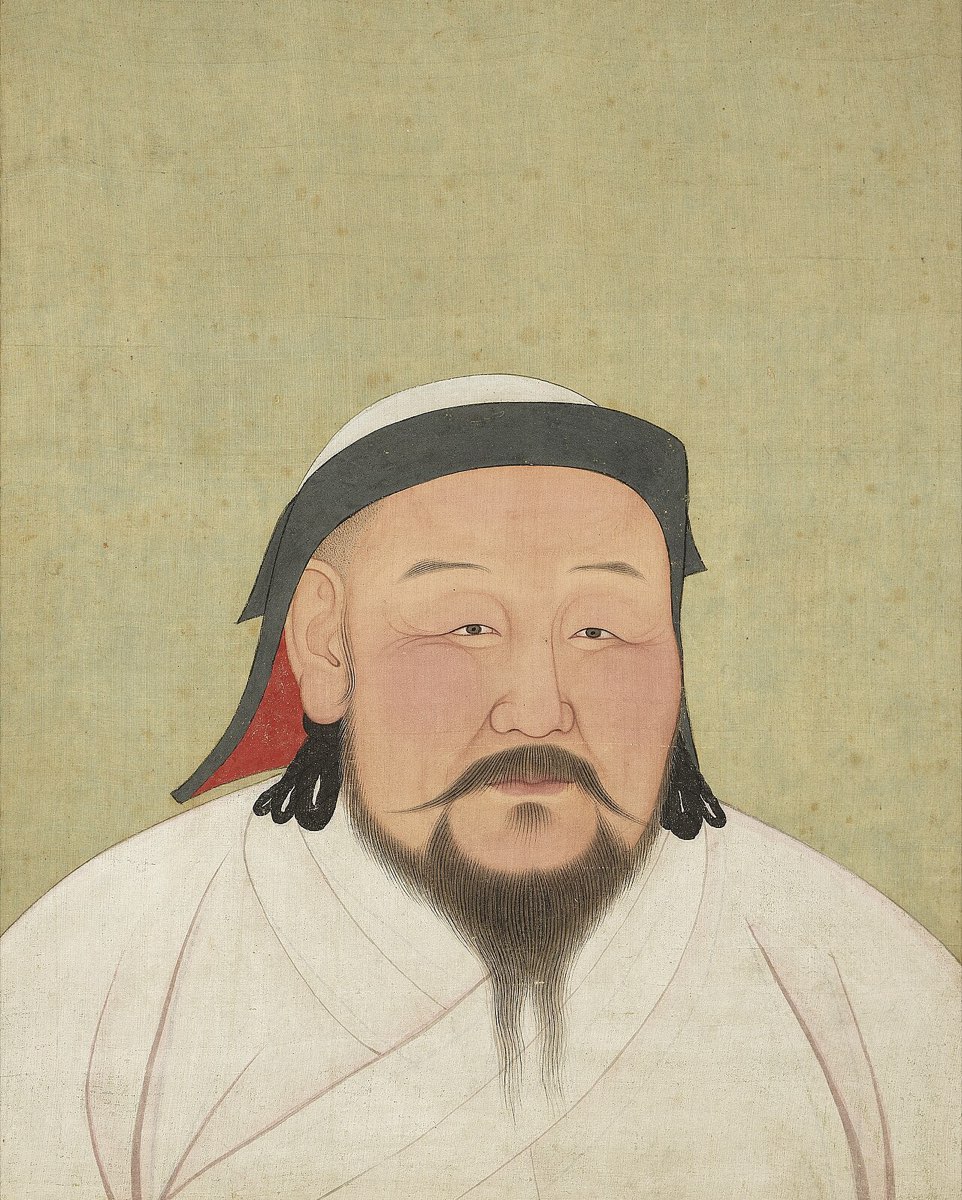
As a result of the movement of the state centre to Peking by the Great Khan Kubilay and the connection of the main Mongolian region to this centre barricaded the relations between the Turkish and Mongolian nations and the ties that continued for a long time between these two nations were loosened or disconnected totally. From that date on, the relations between these two nations did not surmount the natural borders between these two nations in every place and period. Therefore, these relations did not create any effect in respect of ethnical aspects and culture. As a result of the weakening of the centre of Jenghiz Empire, the history of the eastern section with the centre of Peking was mixed with the history of the Chinese nation. The western branch was involved in the historical flow around the Turkish centres that we have studied upon before the Mongolian Empire.
Jenghiz Empire had maintained its union in the periods of his great khans such as Jenghiz (Genghis, 1206-1227), Ogedey (Oktay, 1227/1241), Guyuk (1246-1248), Mungge (Möngke, Mengü, 1251/52-1259) and partially Hubilay (Kubilay, 1264-1294) through the connection to a powerful centre. Mungge (Mönke, Mengü) had selected his little brother, Arik Buga as his successor before his death. Meanwhile, Kubilay who was the leader of the armies in China gathered a general assembly that was composed of the beys of the army in Shang-tu, and made them to elect him as the khan. He selected Peking as the capital city. Arik Buga who was in Karakorum did not recognise this general assembly that acted in contradiction with the traditions. The other parts of the empire were the supporters of Arik Buga in relation with this issue. However, Kubilay defeated Arik Buga, and resolved this case in his favour. After long struggles, Kubilay was able to establish dominion in the Southern China and his dynasty, constituted a glorious period in the history of China. Kubilay continued to subdue the other regions of the empire in the capacity of the khan and the Iran Ilhanli State had to actually recognise this sovereignty for a long time. However, the dynasty gradually became Chinese and they turned into the Chinese rulers rather than the leaders of the empire. These events decreased their effect and influence over the other regions and after a while, the relative connection of the state with the other regions came to an end.