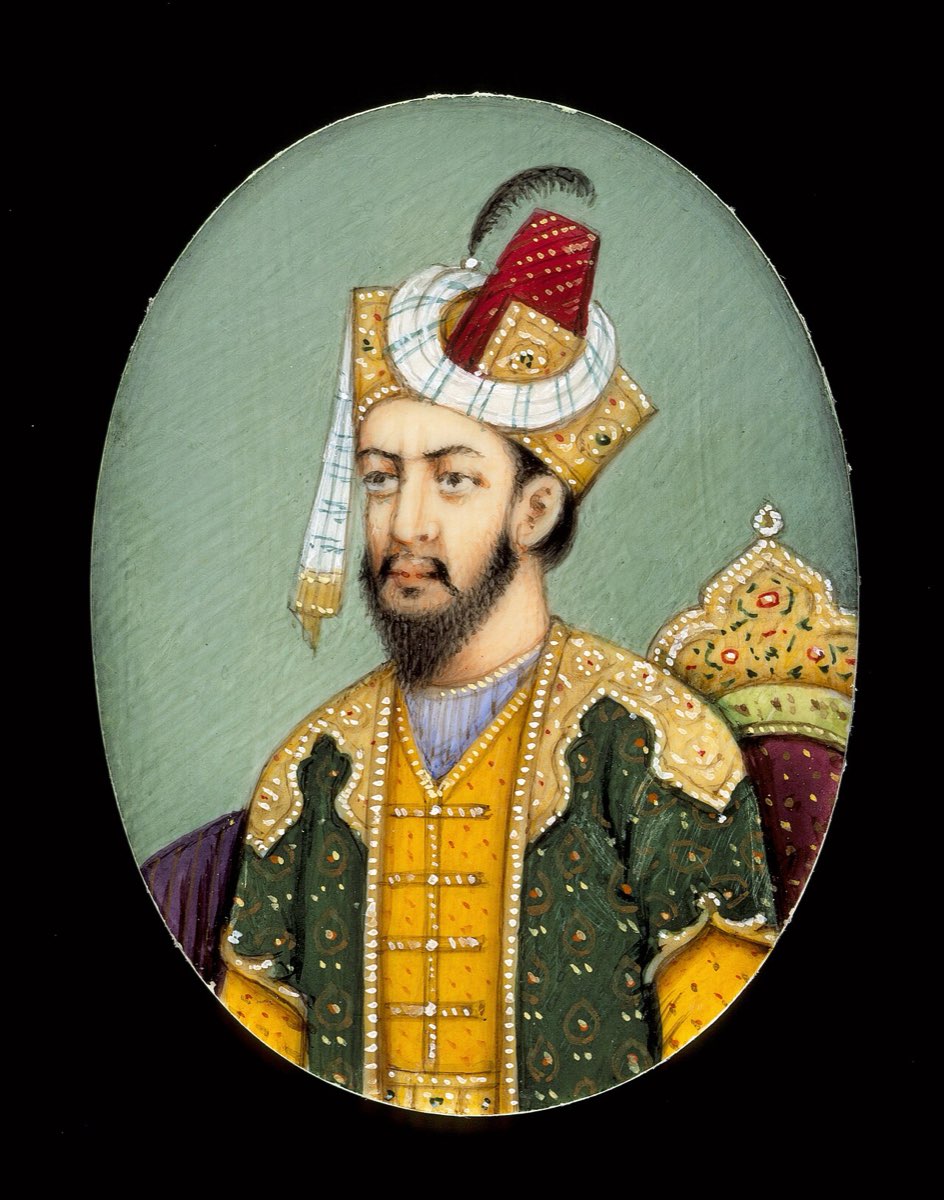
Humayun who ascended the throne upon his father's death reigned the state for 26 years. However, in the first years of his sultanate, he had to fight with the people that longed to possess his throne and the enemies that his father had defeated before. He had six brothers. He gave vast lands and other privileges to them and the other relatives and thus, he maintained his situation in the throne.
On the other hand, Ludi Ruler, Mahmud Ludi collaborated with Afghan emirs and some rajahs and set in motion against Humayun. He also provoked the Gucerat ruler for motion against him. However, Humayun Shah defeated them both. Before long, some struggles burst out among the brothers. His brother, Askeri who was the governor of Gucerat advanced towards Arga. Finally, they made peace with one another; however, the union among the brothers could not be established.
Meanwhile, Sir-Han that tried to establish Sur State instead of Ludi people organised an attack towards Agra at night. When Humayun Shah could not provide support and help from his brothers, he took shelter in the side of Shah Tahmasb (Safevi State).
Şir-Han collaborated with the Ottoman State in order to abolish the Safevi State. Upon this collaboration, Shah Tahmasb supported Humayun Shah with his own armies and then, he sent Humayun to India against him. This was a good opportunity for Humayun Shah. He recaptured Kabul, Kandehar and Bedahshan with his forces that were increased and reinforced. Like his father, Babur, he made Kabul as his base and he started his new conquests. He defeated the large Afghan army in the year of 1555 and penetrated into Delhi. He made an agreement with his brothers. Then, he established dominion over the Empire again.
Although Humayun Shah had provided support from Shah Tahmasb, he did not show any interest in the Shiah Islam and he considered the Safevi State as a danger that threatened the future of his own state. Therefore, he wrote some letters to the Ottoman Ruler, Kanuni Sultan Suleyman through addressing him as "Father Ruler". He stated that they could eradicate the Safevi danger together providing the East would be abandoned to him.
Humayun Shah was not a good commander like his father Babur Shah, and his government was not also good, either. There were frequent rebellions. However, he could protect the empire. While he was trying to take a book from the high shelves of his library in the year of 1556, he fell down from the ladder and he died on the date of 28th February 1556. Before his death, he had listened to the recommendation of his guest, Ottoman Naval Captain, Seydi Ali Reis and sent a letter to his son, Ekber that was fighting with the Afghan units that rebelled in Bedahshah. In this letter, he had stated that he declared his son as the crown prince. Similarly, upon the recommendation of Seydi Ali Reis, his death was kept confidential until the end of the war and return of Ekber from this war. After nearly one month, Ekber who had supressed the rebellion returned and he was enthroned.
Ekber was only 14 years old; however, he became successful due to his faithful commanders and his powerful tutor, Bayram Han.
Although he was not so effective as his father, Humayun Shah was a good poet with a divan. He had a beautiful mausoleum in Delhi.