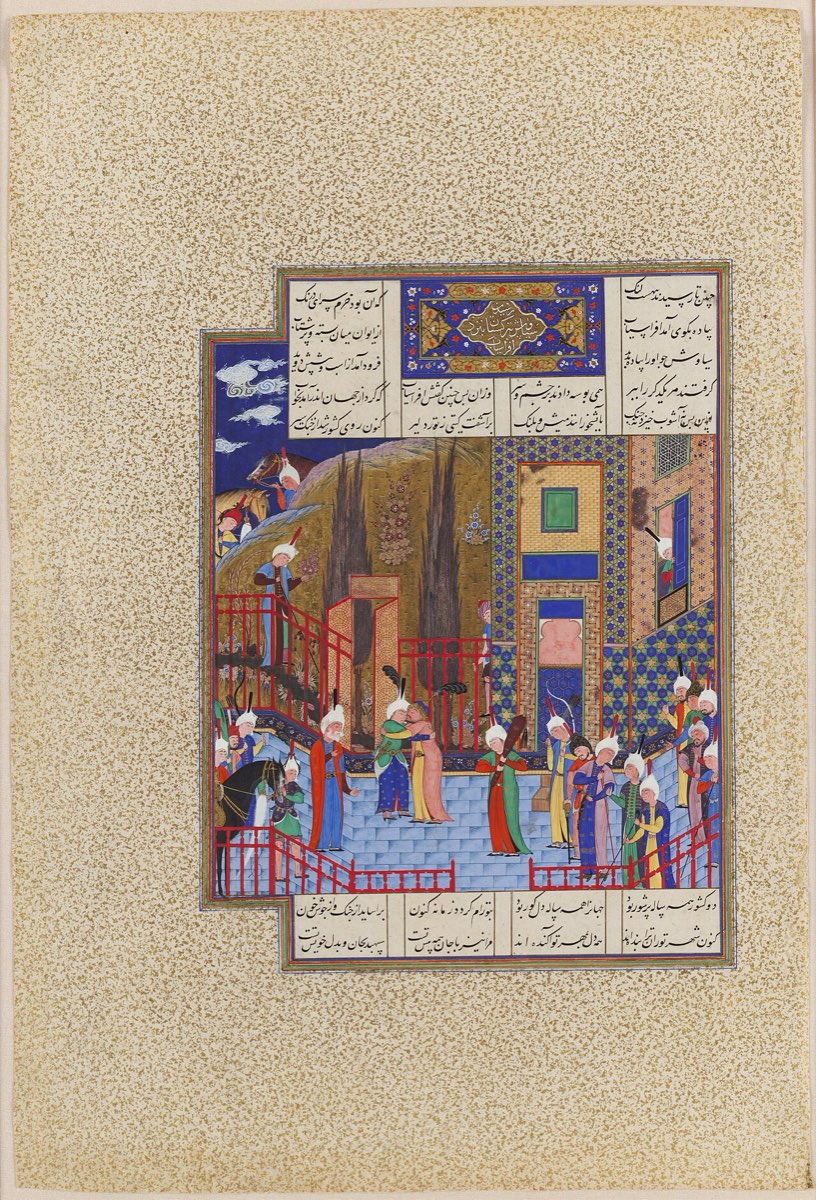
Two myths, Alp Er Tunga and Shu, are found as belonging to the period of the Saka. Alp Er Tunga is a Saka ruler who lived in the 8th century BC and who was lived a lot. Alp Er Tunga united and ruled over all the Turkish clans in Middle East and then conquered Anatolia, Syria and Egypt passing over the Caucasians and founded the Saka state. Alp Er Tunga's life passed full of wars. He was killed by trick during a feast of Keyhusrev, the ruler of the Iranian Meds, with whom he had fought for years. The memories of these fights between Alp Er Tunga and the rulers of the Iranian Meds have been recalled among both the Turks and the Iranians. Alp Er Tunga is called as Maduva in Asyrian sources, Madyes by Herodotus and as Ephrasiab in Iranian and Muslim sources. In Orhun monuments, "washing" ceremony is mentioned among the "Nine Oguzes". A drawing of Alp Er Tunga in blood is found on the wall of "Bezegelik" temple, located on the west of Turfan city. According to Mahmud of Kashgar, who is the writer of "Divan u Lugat-it Turk" (Collected Works of Turkish Vocabulary) and Yusuf Has Hacip, the writer of "Kutadgu Bilig", Alp Er Tunga is Ephrasiab, the great and legendary Turan ruler in Iranian myth, "Sehname".
In Divan u Lugat-it Turk (Collected Works of Turkish Vocabulary), city of Kashgar is indicated as the center of the Turan Empire. The rulers of the Karahanli state also believed that they belonged to the ancestry of "Ephrasiab" and expressed so. Cuveyni, the Mongolian historian also writes that the rulers of the Uighur (Uygur) state originated from the Ephrasiab ancestry. According to Secere-i Terakime (Pedigree of Development), the Seljuk (Selçuklu) sultans accepted themselves to be of Ephrasiab ancestry origin.The Turkish group called as Yakut by the Russians told that they called themselves "Saka".The fact that some of Saka Turks, who we thought to be lost in time, still remain today may help some truths to be unveiled by research of many matters. Historian Mesudi writes that the Gokturk Khan at the beginning of the 7th century AD is of the Ephrusiab origin.
All this show that the myths related to "Tunga Alp" originated among Turks living in east and central Tiyanshan before Gokturks and that it continued among the Gokturks and Uighurs (Uygur). The text of Alp Er Tunga could not survive today. In sources, some of which we mention above, information and a lament are found about this invaluable Saka ruler and hero.
In Kutadgu Bilig, following information are given about Alp Er Tunga: "If you pay attention, you will see that the best rulers among the rulers of the world are the Turkish rulers. Among these Turkish rulers, Tonga Alp Er was the one with a famous name and a bright future. He had high knowledge and many virtues. How elite, how high, how brave he was; a sagacity man rules the world in this universe."
People call him Ephrasiab; this Ephrasiab prepared for raids and conquered countries. Many virtues, much intelligence and information are needed to rule and manage the world. Iranians recorded this. "Who would know him if he was not in the book?" Iranian myth Sehname gives greatest information on Alp Er Tunga, as far as we know today. One of the main themes of Sehname is Iranian-Turan wars. According to this myth, the greatest hero is Ephrasiab, who is first the prince and then the ruler. The information on Alp Er Tunga in Sehname may be summarized as follows: "Prince of Turan, Ephrasiab called war against Iran on his father's request. Two armies faced each other in Dihistan. Ephrasiab, as tall as a cypress, whose chest and arms were like a lion and who was as strong as an elephant, defeated the Iranians. Iran ruler became a prisoner to Ephrasiab. Zal, the sultan of Kabil under the rule of Iran took revenge of Iran first. Although Zal was successful, he could not prevent the Iranian Shah from being killed.
Ephrasiab started a new war in order to capture Iran. Rustem, son of Zal and one of the greatest heroes that Iran ever raised, started a campaign against Ephrasiab. Endless wars took place between Ephrasiab and Rustem, son of Zal. Keykavus, who was on the Iranian throne at that time, offended both his son Siyavus and Rustem, son of Zal. Siyavus took refuge in Ephrasiab. Siyavus had a son from the daughter of Piran, the Turkish chieftain, to whom he had gotten married while he was in Turan. Siyavus named his son after his father, Keyhusrev.
Ephrasiab was the ruler of Turan for long years. The Iranians kidnapped Keyhusrev, son of Siyavus and made him the ruler of Iran. Keyhusrev co-operated with Rustem, son of Zal, and beat the Turan armies. Keyhusrev and Ephrasiab fought for many times. At last, Ephrasiab, who was deprived of his army, was killed by the men of Keyhusrev.
In Sehname, it is told that Alp Er Tunga, who is referred to as Ephrasiab, beat Iranian rules for many times. However, during Iranian and Turan wars, the Iranian rulers changed for many times and Alp Er Tunga, who is suggested to have lived for 140 years, continued his fight. This shows that Ephrasiab is not unsuccessful. In case the real text of the myth is found, more reliable comments can be put forward in relation with this myth.