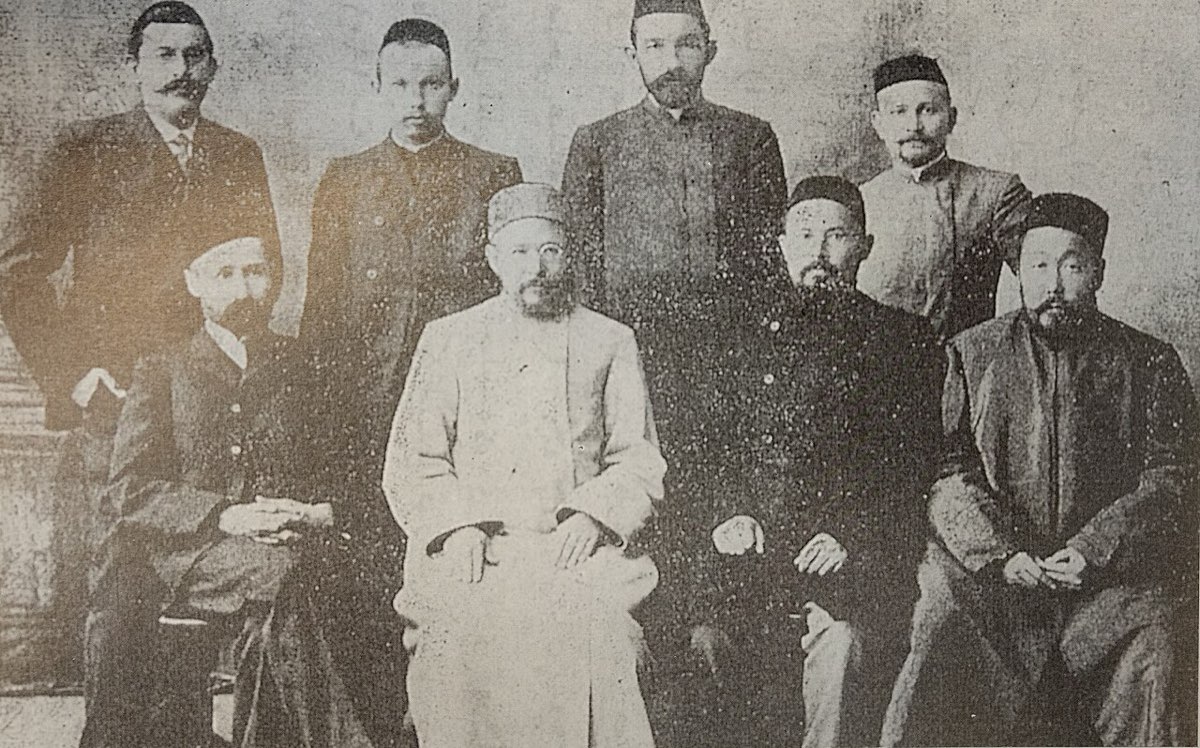
Idyll-Ural Tatars-Kazan, Kasim Tatars and Miser people- constitute one of the largest groups. The Christian Tatars formed a much more different community. There are Nukrat, Perm, and Tipten Tatars among the Kazan Tatars. There are some groups that bear local characteristics among the Christian Tatars. Nogaybek, Melke, Alabuga, Miser people, the North and South groups. These groups are divided into several subgroups.
In respect of anthropology, there are some people of dark complexion (40% of Kazan Tatars and 60% of Miser people), of white complexion (20% of Kazan Tatars and Miser people) and of European type among the Idyll-Ural Tatars. Ural and Mongol types are frequently seen in the Southern Siberia.
The spoken language of the people particularly among the Astrahan and Siberian Tatars is composed of three dialects: These are the dialects of Miser, the Middle (Kazan-Tatar) and the Eastern Siberian Tatar dialects. There are some characteristics in the language of Astrahan Tatars: The language of Yurt Tatars is composed of the mixture of Nogay and Idyll-Ural dialects. Karagash dialect is based on the dialect of Nogay and has been under the influence of Tatar language. Turkish spoken by the Lithuanian Tatars vanished in the century XVI. These Tatars use the language of the White Russians. In the beginning of the century XIX., some of Tatars were using the languages of Poland or Russian. Generally, the language of Idyll-Ural, Siberian and Astrahan Tatars is included within the Kipchak group of Ural-Altay family.
Tipters
Tipters composed of 328 thousands of people in the beginning of the century XX was the subgroup of Kazan Tatars and they constituted the greatest organisation of Ural Tatars. Disregarding the ethnical identity of people, the name of Tipter was given to the people dwelling in Bashkurd lands and Ural regions who were not Russians at the end of the century XVIII. There were Tatars, Mari, Udmurt, Mordua, Chuvash, Bashkurd, Basermans among these people.
The world of "Tipter" was attributed to the word of "Notebook" in Farsi language. This word meant the "list of laws" for Turks and the tax and jurisdictional resolutions for Altin Ordu State. The name of "Tipter" is supposed to be given to those who lived on these lands under legal registration.
Perm Tatars
Perm Tatars is the subgroup of Kazan Tatars and they live in the neighbourhood of the provinces of Perm and Ekaterinburg. Before the revolution, they used to live in the cities of Perm, Osinsk, Krasnaya, Ufa, Kunguz pertaining to the province of Perm. They were called as Kunguz Tatars on account of the name of the Kunguz City in which they lived in the centuries XVII-XVIII. In the beginning of the century XX, the number of Perm Tatars increased to 52.700 people. Those who lived in the city of Bardim within the province of Perm have officially been called as "Bashkurd". Such a division was not observed among the people at all They were divided into two sections as "Greyneyak" and "Körgeyak" in respect of the old geographical settlement places and the tribal relations.
Nukrat Tatars
Nukrat Tatars is the subgroup of Kazan Tatars. The name of Nukrat is derived fom the name of the big and fortified city centre of Tatar-Nukrat Beyliği.
Besermens
Besermens is a small Tatar group that lived among Udmurts. Some of Besermens who were 10 thousands of people according to the census 1926 joined the Nukrat Tatars. Today, Besermen people live in the city of Slobod connected to the province of Kirov and in some districts of the Republic of Udmurt.
Miser people
Misers constitute the second largest group among the Tatars of Idyll-Ural region. Miser people are divided into subgroups such as the South, Simbir, West-Ural and Northeastern Misers in accordance with the regions in which they live. But the most interesting one is the Simbir Tribe. Simbirs, a very old Turkish tribe is the ancestors of the Chuvash Turks today. The name of Simbir that still lives among Miser Tatars constitutes a concrete example for they are the common ancestors of Chuvash people and Tatars. On the other hand, they have given their name to the region called today as Siberia. The name of Simbir is pronounced as "Sibir" by the Russians and Siberia with the meaning of "Simbir homeland" is a Turkish homeland.
The Miser dialect is the Northern dialect of the Tatar dialect. In the historical periods, the Miser people were called as Mishar, Tyumen, Alatır and with the Muslim Turkish names. Misers have been under the influence of Kazan Tatar language in the course of the formation of their literary language in the centuries XVIII-XIX. Although they preferred to call themselves only as "Muslims" vefore, they then started to classify themselves with the common name of Tatar. On the other hand, 200 thousands of people accepted the name of "Miser" as a sub-dentity following their identity of Tatar according to the census of 1926.
to be continued