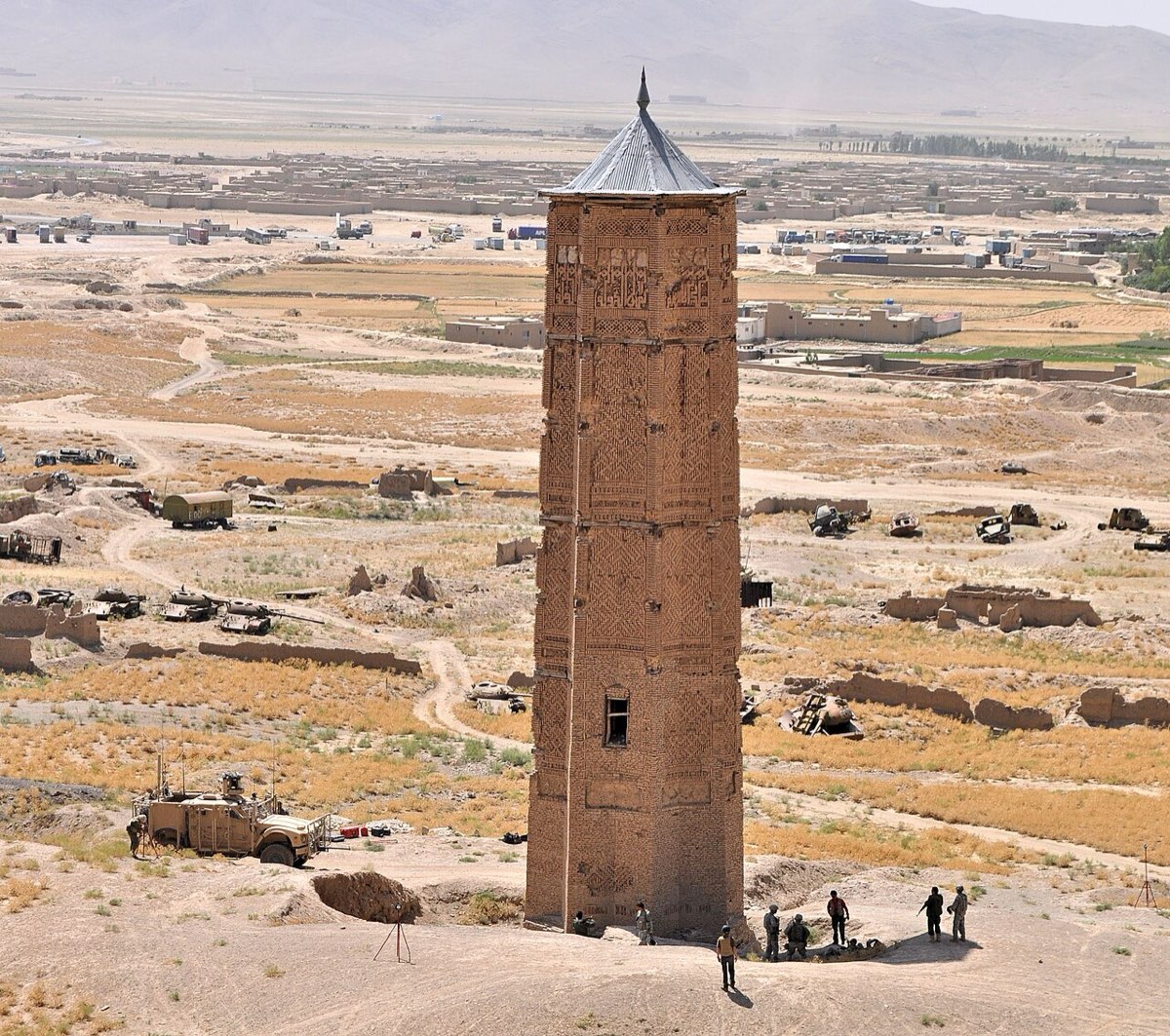
The period of the Gazneli State has been a glorious era in respect of culture. Sultan Mahmud and his son, Mesud had tried to gather the greatest artists of the period in their palace and they showed great respect and affection to the poets. It has been rumoured that there was four hundreds of poets in the palace of Sultan Mahmud. Besides literature, the recording of history was of great significance in the Gazneli State.
When Sultan Mahmud captured Harezm, he brought Biruni that was one of the greatest scientists of the middle ages to Gazne. Therefore, Biruni had the opportunity to join the expeditions of the Gazneli State that were organised to India. His great work of art titled as "Tahkik mali'-Hind" was written under these circumstances. This work was the first work of Islam that dealt with the beliefs and traditions of Indians. There are extensive information about the Indian religion, science and geography in this work.
Gazneli sultans also attracted attention due to their architectural activities. Only few works built in the periods of Sultan Mahmud and Mesud could survive until nowadays. Mahnud had constructed bazaars, bridges, aqueducts and mosques for the public benefits. Sultan Mesud was essentially a talented architect and he had drawn the plan of a palace that he had had it constructed.
The principal role of the Gazneli State in the history of Turks and Islam is the conquest of the northern India. This led to the capture of a strong base in Punjab for the religion of Islam and it laid the foundation for the following conquests in India. Furthermore, the Gazneli State has been recorded in the history as the state that established direct relations with the Indian world and culture. They were the factor with the first degree in the foundation of the State of Pakistan after long years. The characters of Sultan Mahmud and Mesud were remembered as the great Muslim and public heroes in the minds of the people. In the following Iranian literature, Mahmud has been cited as a famous character and a ruler that was the symbol of justice and moderation.